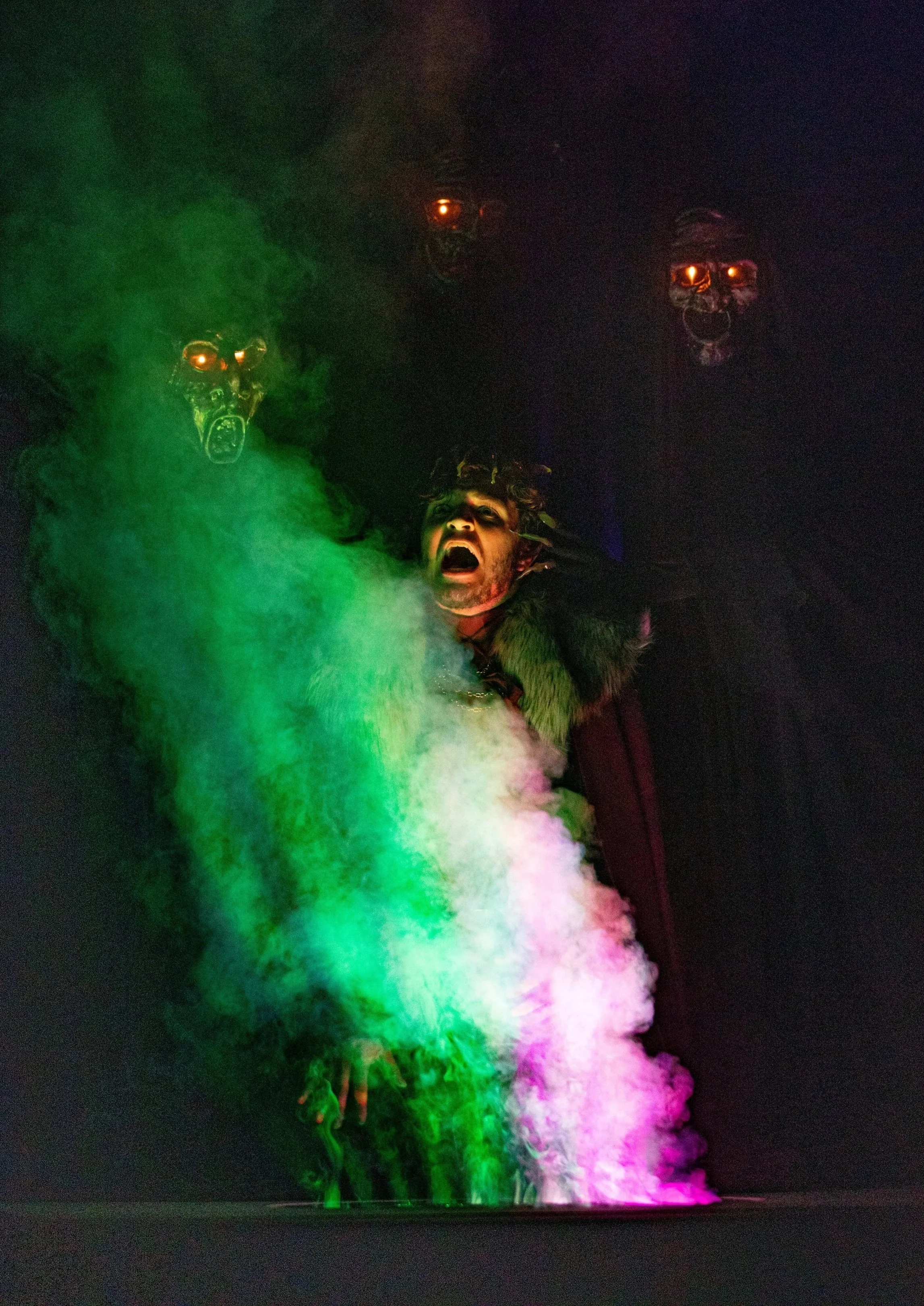
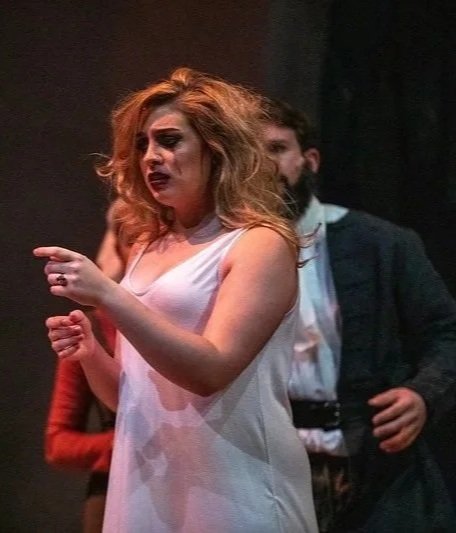
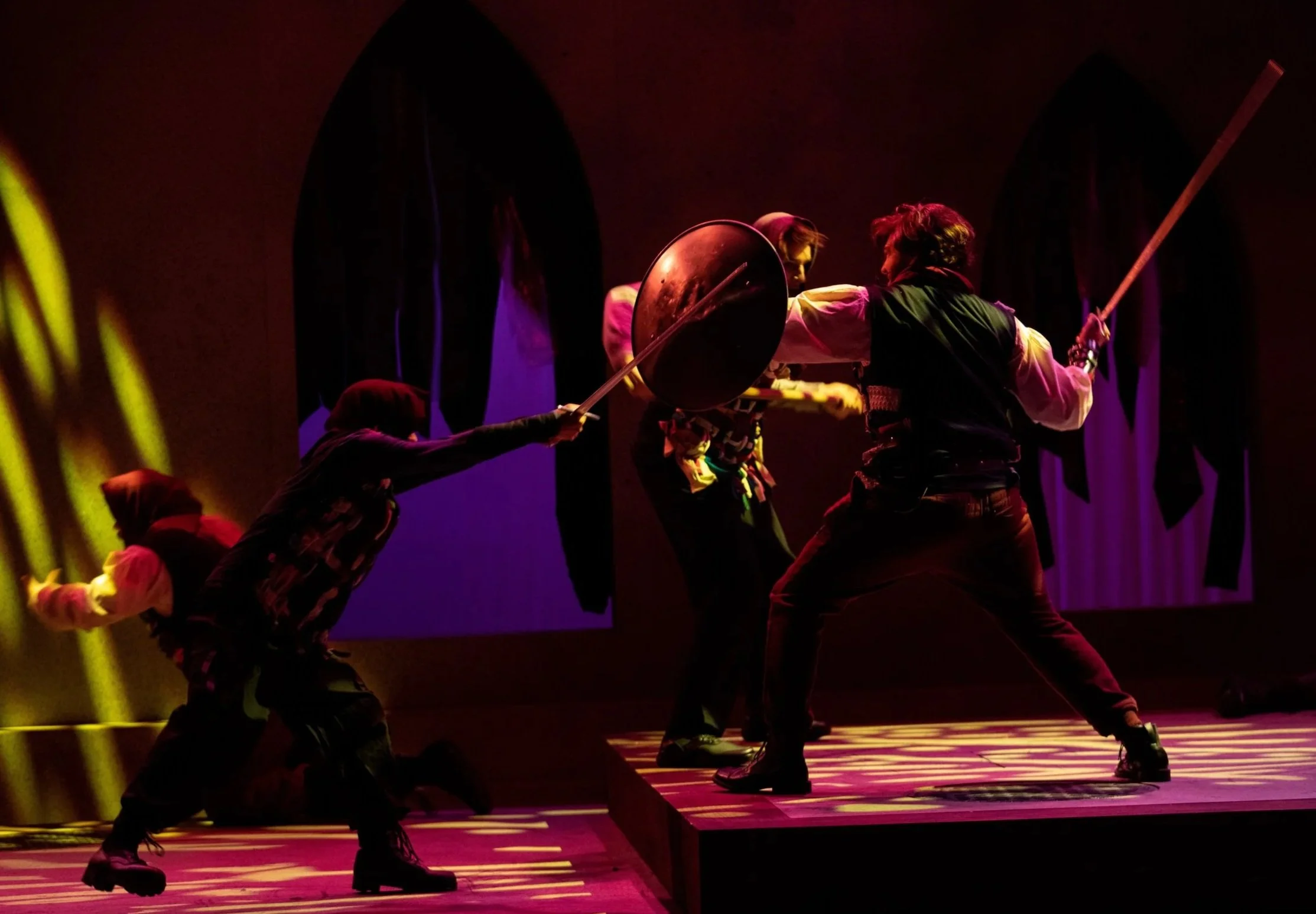
West Chester University’s take on the Shakespearean tragedy became “a heavy metal concert full of sound and fury” as Macbeth and the cast constantly fight for what’s most important for them. For some it’s power, for others it’s integrity, and some struggle in hopes to prioritize both. Along with the heavy metal concept, the production team wanted to display parts of the play that are usually only alluded to, despite an abridged version. The Captain’s Speech is more of a flashback and Macbeth’s severed head is the metaphorical trophy Macduff holds in triumph bringing power back into reliable hands.
Macbeth
Written by William Shakespeare
Adapted, Directed and Fight Choreography by John Bellomo
Photos by Rob Keller
Set Design by Martin Dallago
Costume Design by Constance Case
Lighting Design by Myles Martin
Sound Design by Rachel Borczuch
Hair, Makeup, Special Effects by Olivia DiIorio, Joshua Waltz
Act 1, Scene 1: Thunder into the witches’ entrance and underscoring
Act 1, Scene 2: Captain Speech recorded over the opening battle
Act 4, Scene 1: Witches Caulderon reveals the Line of Kings
Act 4, Scene 2: Macduff family murder
warning: at 0:42 there is a sound simulating a baby’s murder
Act 5, Scene 1: Lady Macbeth hallucinates
Act 1, Scene 3: Drum signaling the witches of Macbeth’s presence
Act 2, Scene 1: Macbeth’s “Is that a dagger” soliloquy
Act 3, Scene 4: Ghost of Banquo haunts Macbeth at his celebratory dinner
Act 5, Scene 5: Final Battle, Macbeth vs Macduff
Concept & Process
When the director gave the concept of “Macbeth, a heavy metal rock concert full of sound and fury,” he also mentioned wanting to focus on ambition, and that was the intersection in creating such a spectacle out of such a tragedy. Heavy metal is an ambitious genre. It is not a part of our mainstream culture today, or makes great money; rather, it is an art form that people do because of their love and passion for this music, and that’s what drives them over anything else. After making that initial connection, it became apparent that it was important to focus on more than just Macbeth’s ambition, but the ambition that drives everyone throughout the play. We played with speaker placement and volume in creating soundscapes behind some of the soliloquies we hear from these driven individuals, so we as an audience feel inside their minds, whether that be to understand their actions or further condemn them.
When it came to the most supernatural elements of the show, I wanted to make the room feel a sense of discomfort, like what comes in the elements of the show we don’t normally see on stage that our production portrayed. I used low frequencies and binaural beats as the soundscapes under these scenes; in a way, you felt the sound before you heard it. My favorite design choices as an audience member are when I don’t notice a sound cue until it’s gone, and that is what I aimed for. I was also able to collaborate with the actors and a colleague on the recorded materials. I sat in rehearsals for the witches and utilized their choices as the foundation for how to put effects on their voices. I took some of Banquo’s lines out of context and recorded them, and without the surrounding text makes for cryptic one-liners for Macbeth. In recording the Captain Speech, I recorded with an actor who was not in the production, and we recorded in different ways to meld the voiceover and fight choreography together.