Under the Tree
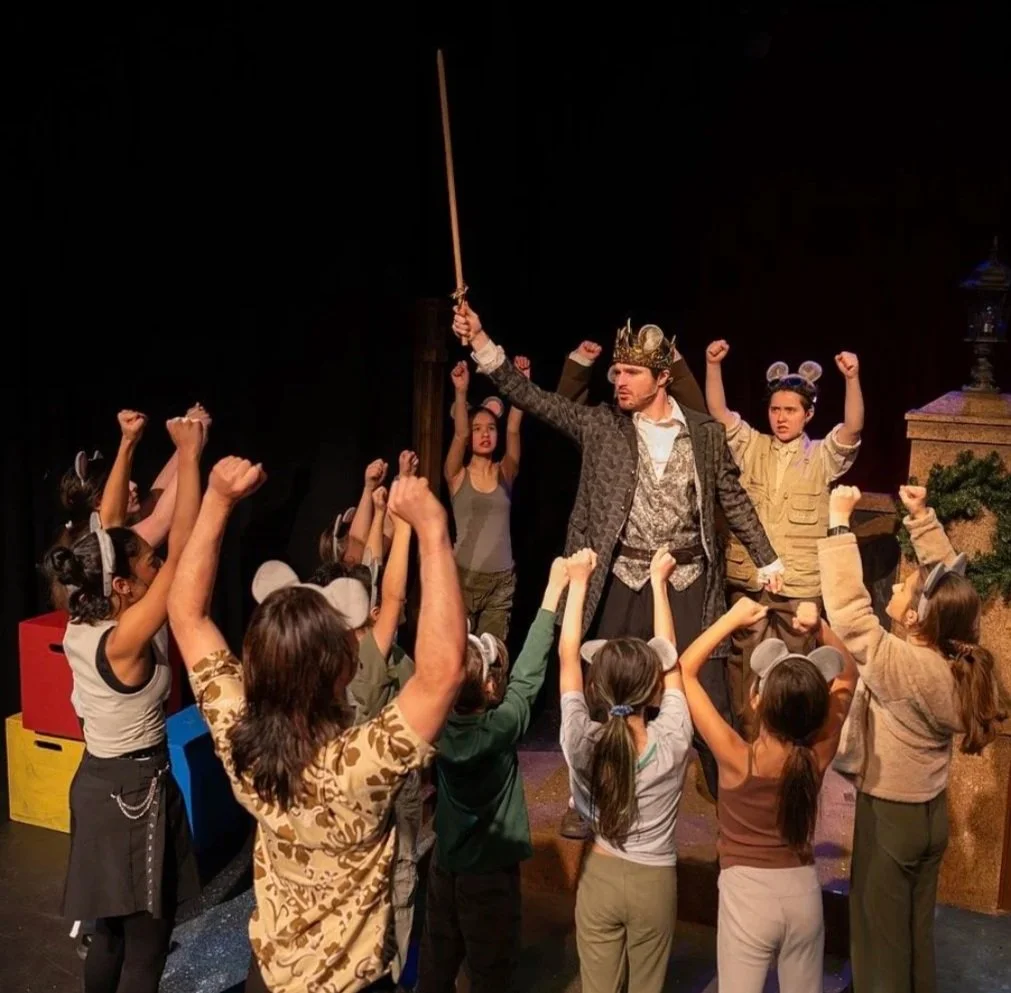
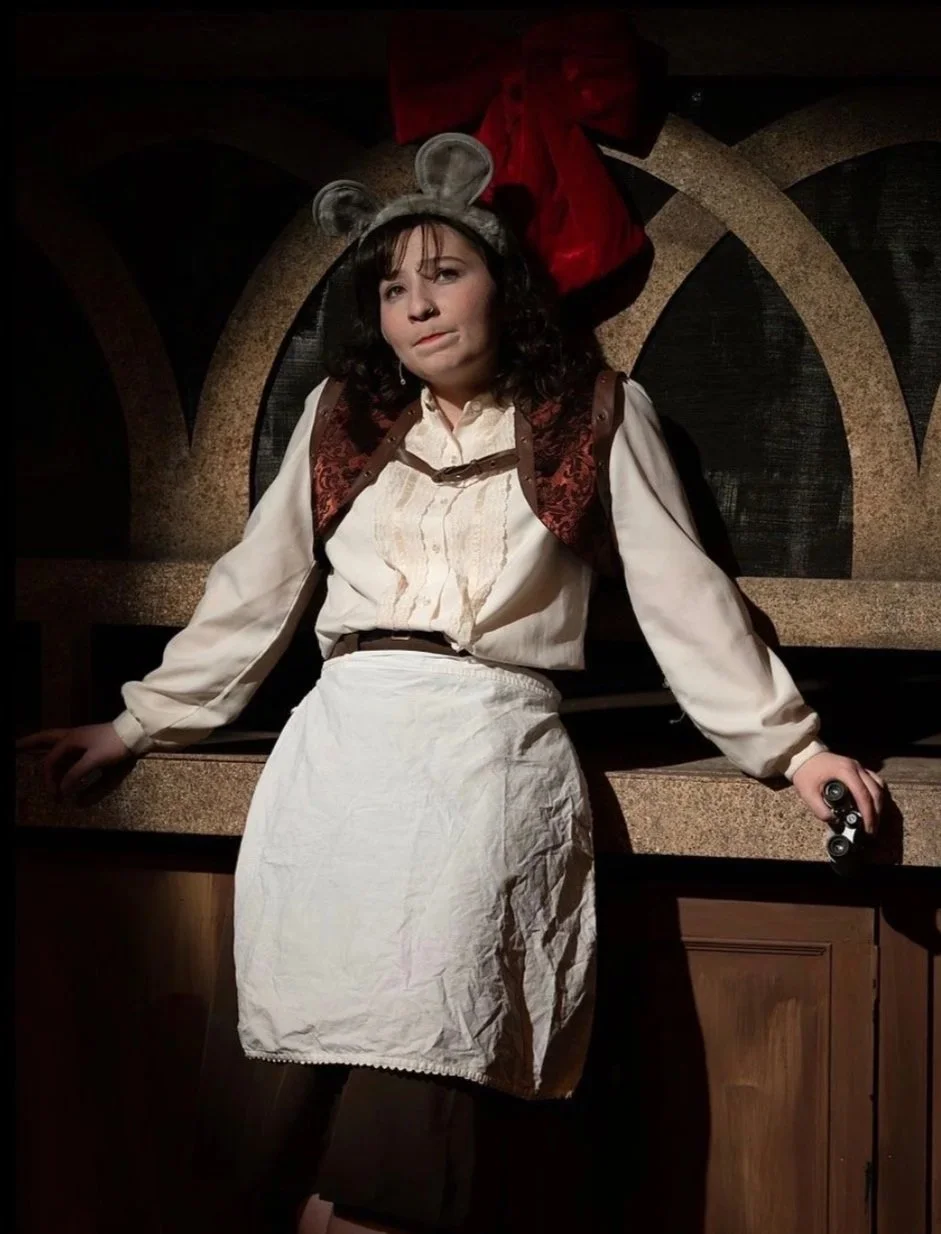
NextStop Theatre Company’s Holiday production features the new workshop Theatre for Young Audiences (TYA) musical, inspired by the Nutcracker Ballet, written from the rats’ perspectives. Gabi, daughter of the Rat King, struggles to find her purpose while the town prepares for the “Ready Day” battle to secure food for the winter. The rat world, human world, and magic world collide as Gabi is torn between tradition and innovation to save her family and friends.
Written by Hope Villanueva, Pyotr Ilyich Tchaikovsky, Drew Fornarola, and Jonathan Quesenberry
Directed by Dylan Arredondo & KJ Moran Velz
Photos by Loch Leven Photography
Set Design by Ella Skoy
Costume Design by Abi Blair
Lighting Design by Maddie Southard
Sound Design by Rachel Borczuch
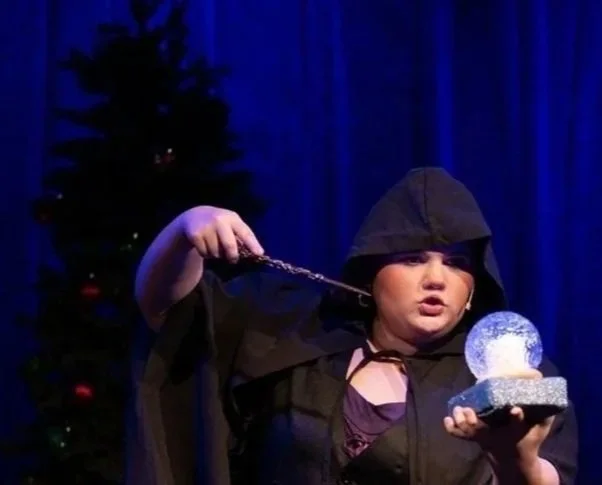
Scene 5: Uncle Drosselmeyer’s first entrance where his magic is revealed
Scene 5: Drosselmeyer’s spell brings the Nutcracker to life, the Battle begins
Scene 5: Drosselmeyer’s transformation to the Sugarplum Fairy
Scene 5: End of song “What Do I Do Reprise”, Portal Shuts, end of scene
Scene 13: Trees come to life to save the Tin Forest
Scene 13: Portal opens, Gabi has to decide between returning to normal life or attempting to help the fairy kingdom, end of the world
Scene 8: Waltz of the Flowers, music gradually gets faster, and flowers are possessed to dance faster. The Nutcracker, Clara, and Gabi get stuck in the dance until Gabi uses the magic stone to get everyone out of the cycle.
Scene 5: Clips from the Battle Scene, including clips from above in context
Scene 14: Medley of twinkles, emulating Gabi’s wishes
Concept & Process
Most of the clips are from Scene 5, the big battle sequence set across multiple locations. Ideally, this moment in the story would rely on more advanced choreography. With limited space and the nature of an educational production, we needed other ways to tell the story, especially for younger audience members who stay engaged when multiple senses are activated. Sound became the key storytelling tool, allowing us to fill in visual gaps while giving me the greatest creative freedom to shape the audience’s experience.
The composer and orchestrator used the original Nutcracker score as the foundation for the production’s songs, and I carried that motif into the sound design. I crafted soundscapes by editing movements from the original music—such as “Fir in a Forest,” “Drosselmeyer’s Entrance,” and “The Sugarplum Fairy”—and by shaping their timing so each began or ended with intentional storytelling purpose. One example is the battle music: although the script places it elsewhere, we chose a dramatic version of the piece to underscore the moment the Nutcracker comes to life. It becomes the first theme he hears, a musical signal that trouble is near.